Table of contents
Introduction
Snow conditions on October 2
Jastrabia veža, October 21
Photo gallery
Jahňací štít, October 22
Photo gallery
Footnotes
Introduction
Winter has shown up early in the High Tatras this year, and with quite unexpected force.
This caught me somewhat by surprise at the closing days of September and, frankly, I was poorly prepared since the better part of my winter equipment was stowed orderly and tidy in my closet at home in Germany.
What I was carrying with me was still good enough for scaling the Priečne sedlo mountain saddle, a place I had been before and was familiar with.
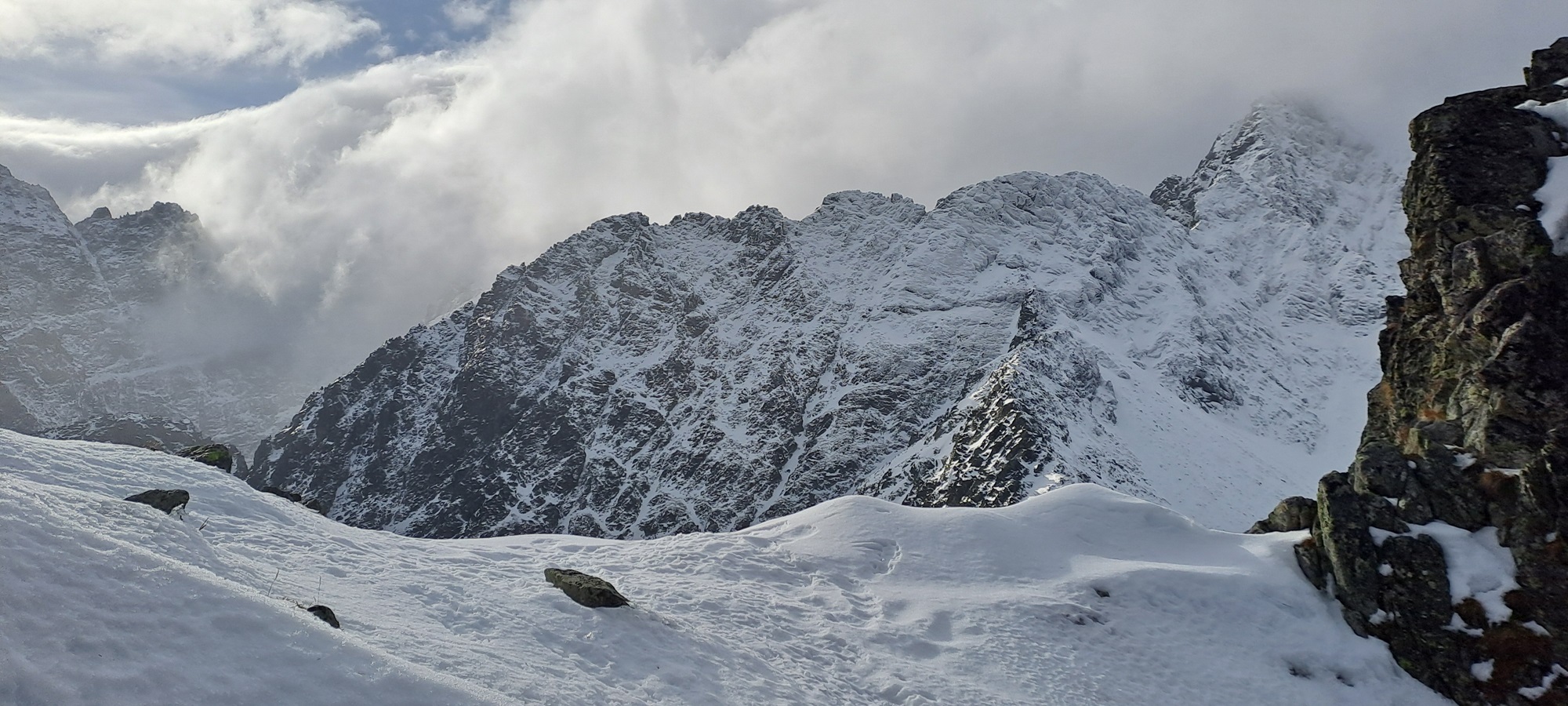
But when trying to hike to Jahňací štít (2230 meters above sea level, the easternmost peak in the High Tatras), I soon realized that there wasn’t a chance getting to higher altitudes without crampons, an ice-axe and warm clothing, even ploughing my way through the piles of snow on not really steep terrain in Červená dolinka (literally “Red Valley”) was a remarkable effort.
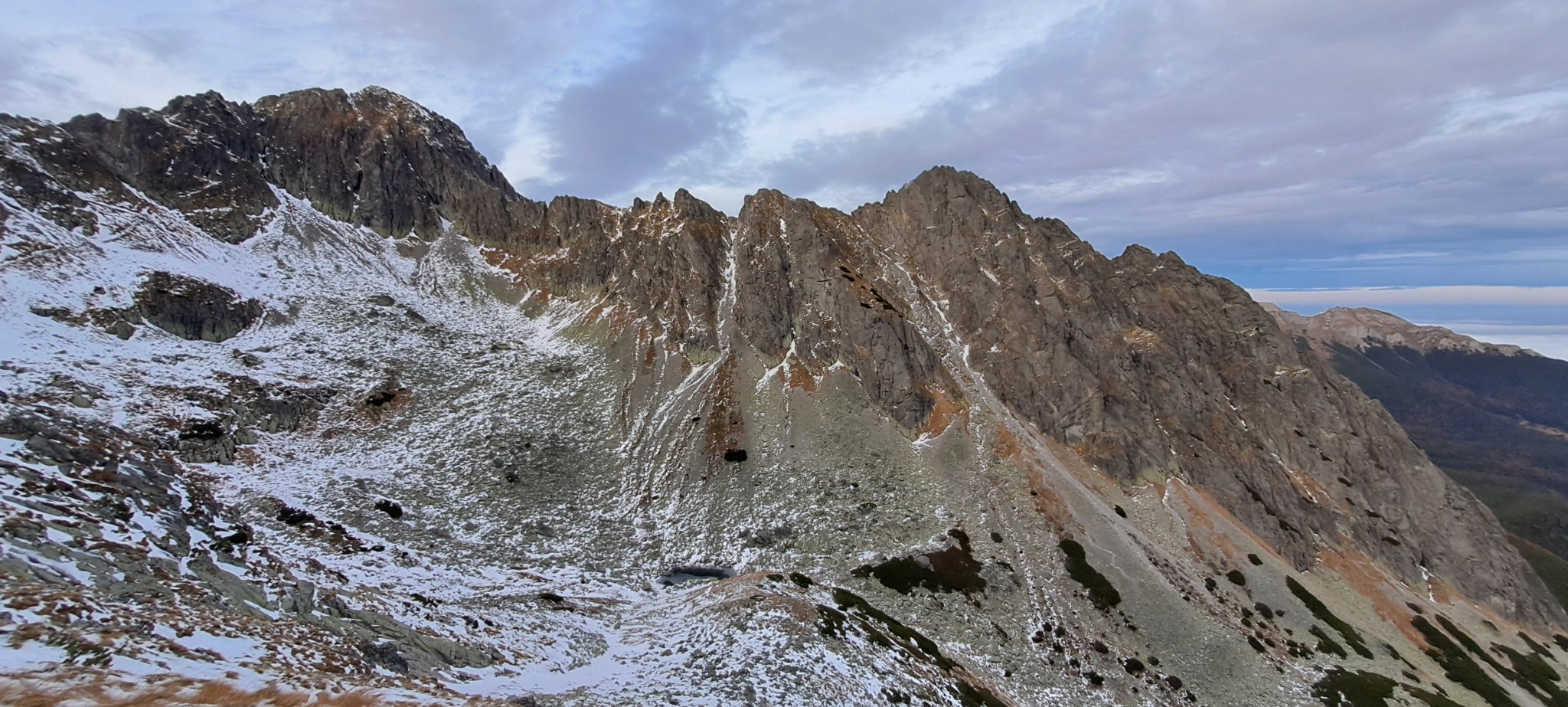
All that being said was even more true for a conspicious peak called Jastrabia veža (literally “Hawk tower”, 2137 meters above sea level) lying not far off, that can be reached on a comparatively benign foopath at the north face1 (the other faces of this mountain are for genuine rock climbers, obiously), yet including a couple of spots where you have to climb in the UIAA I – II range.
Snow conditions on October 2
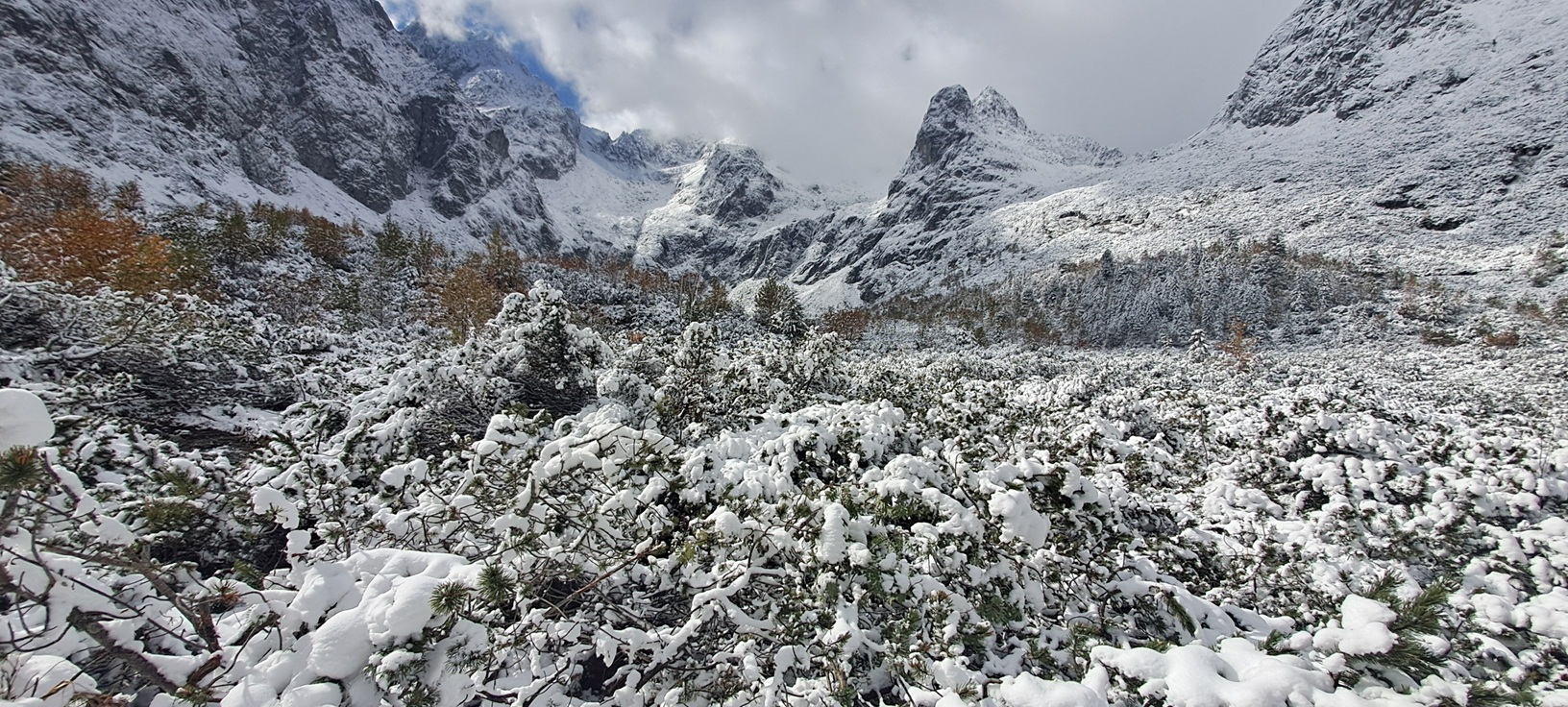
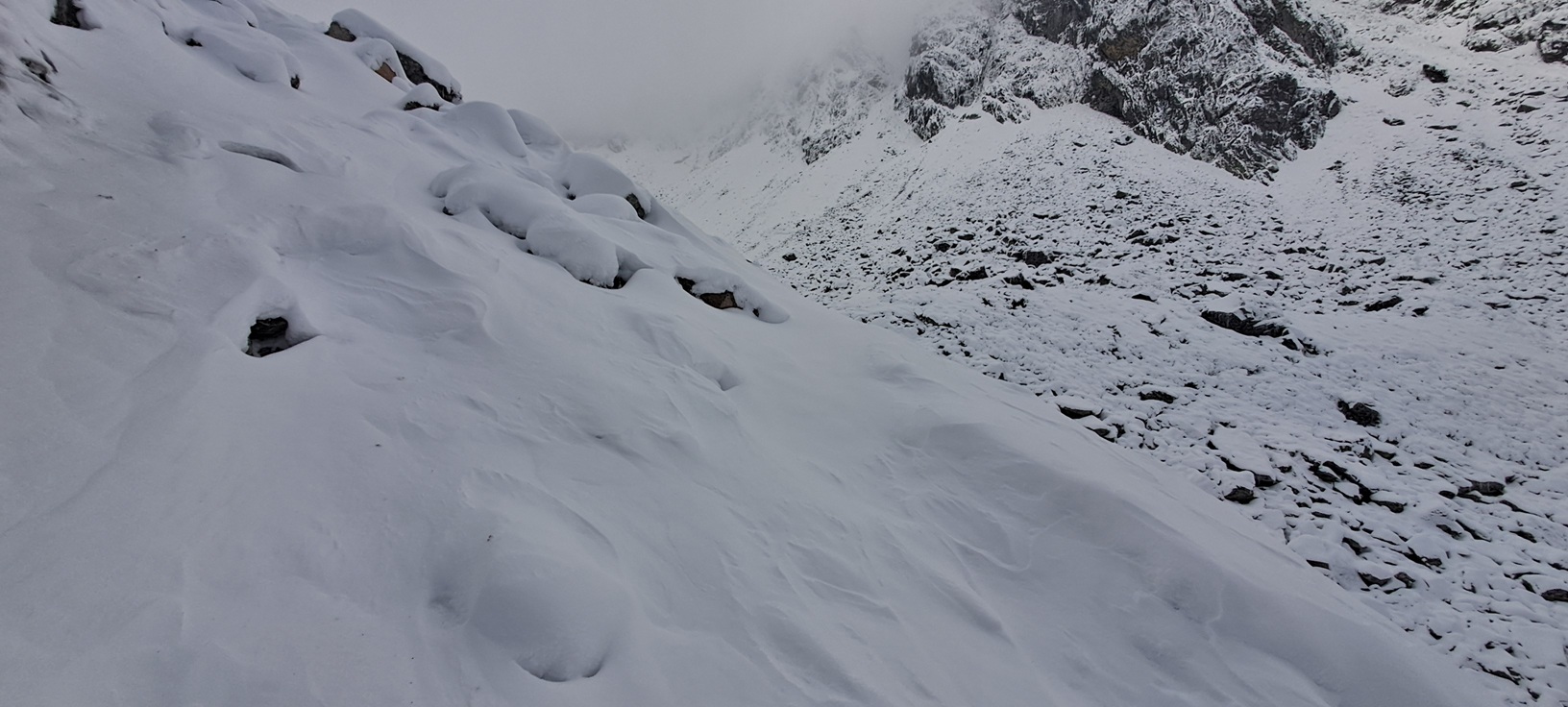
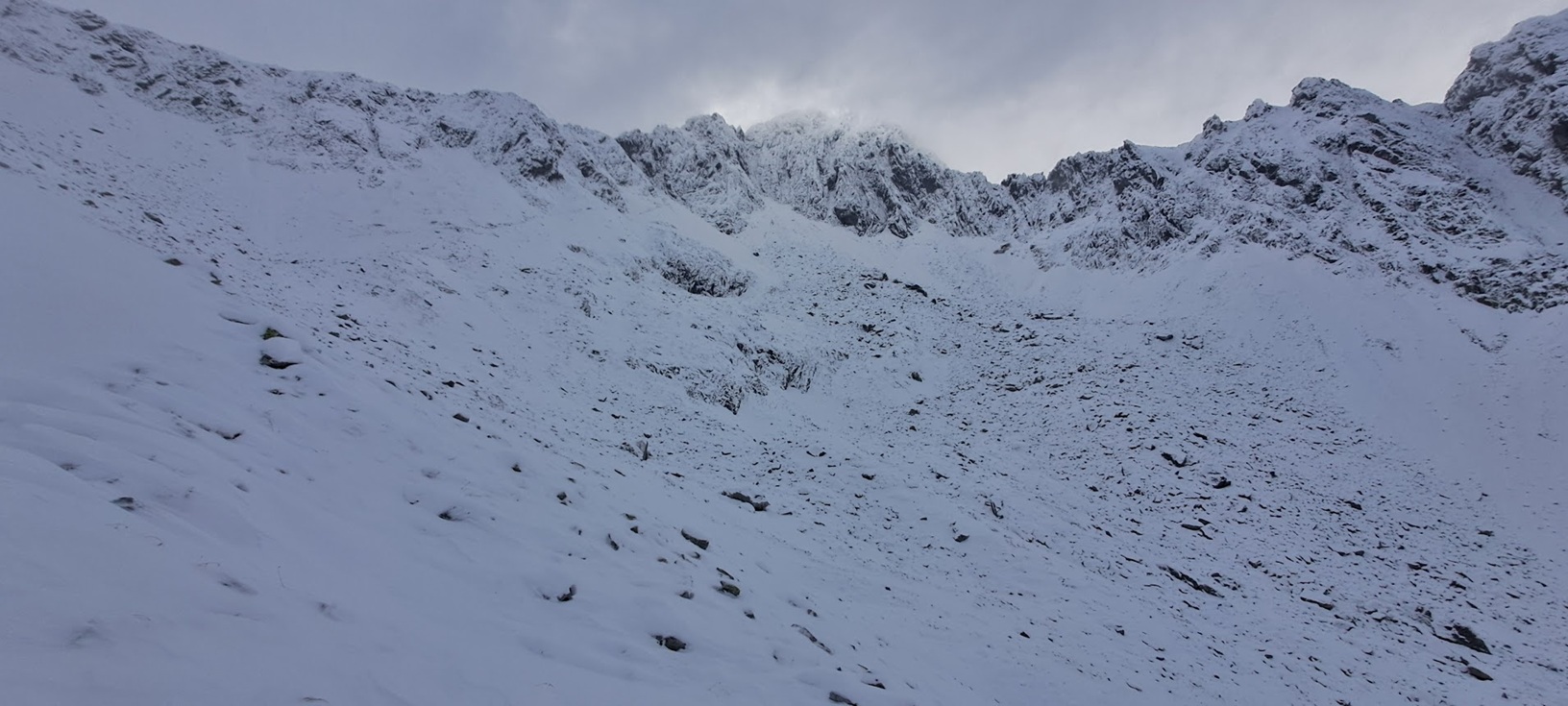
Because of the slight disappointment not reaching either peak, I decided, rather defiantly, to visit the High Tatras mountain range one week before winter closure2 once more in order to afford a further attempt.
Jastrabia veža, October 21
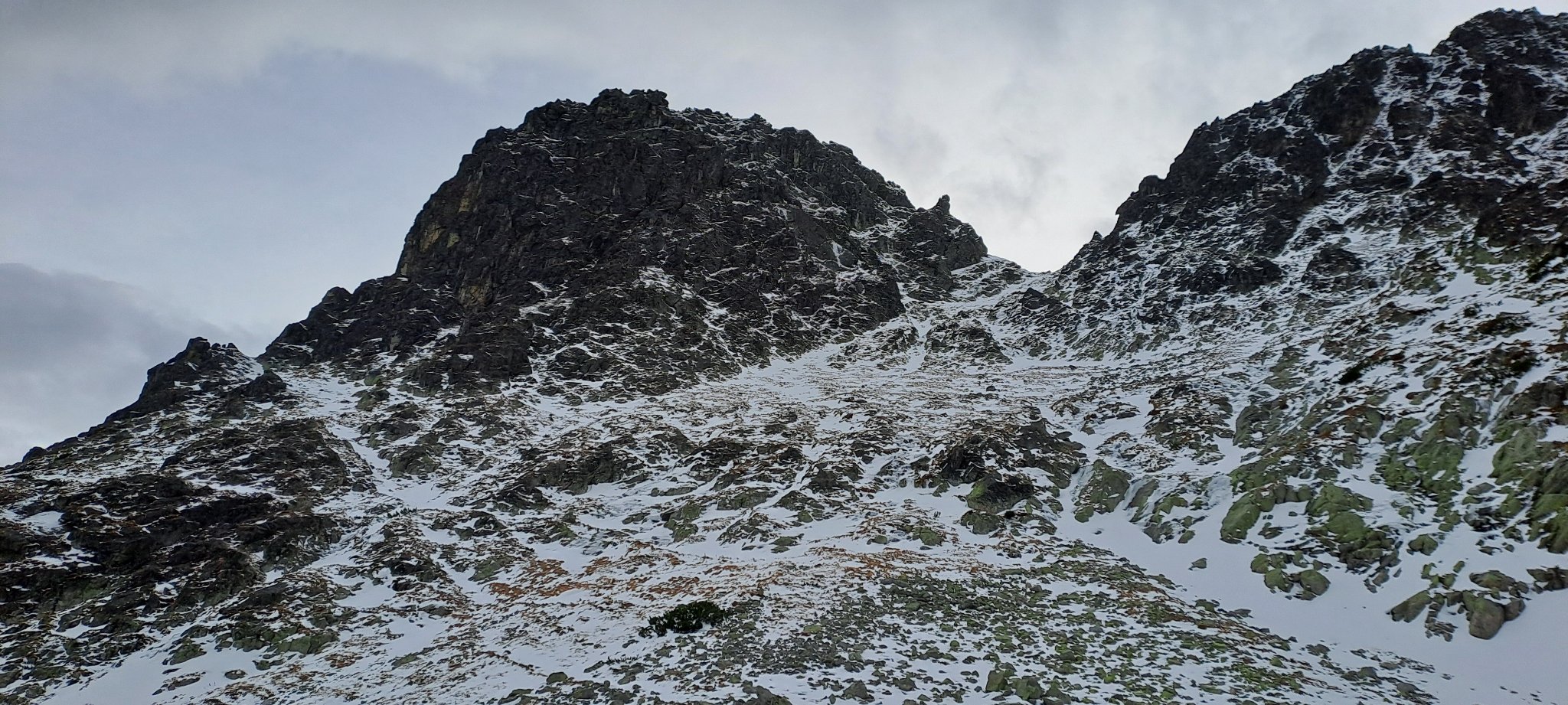
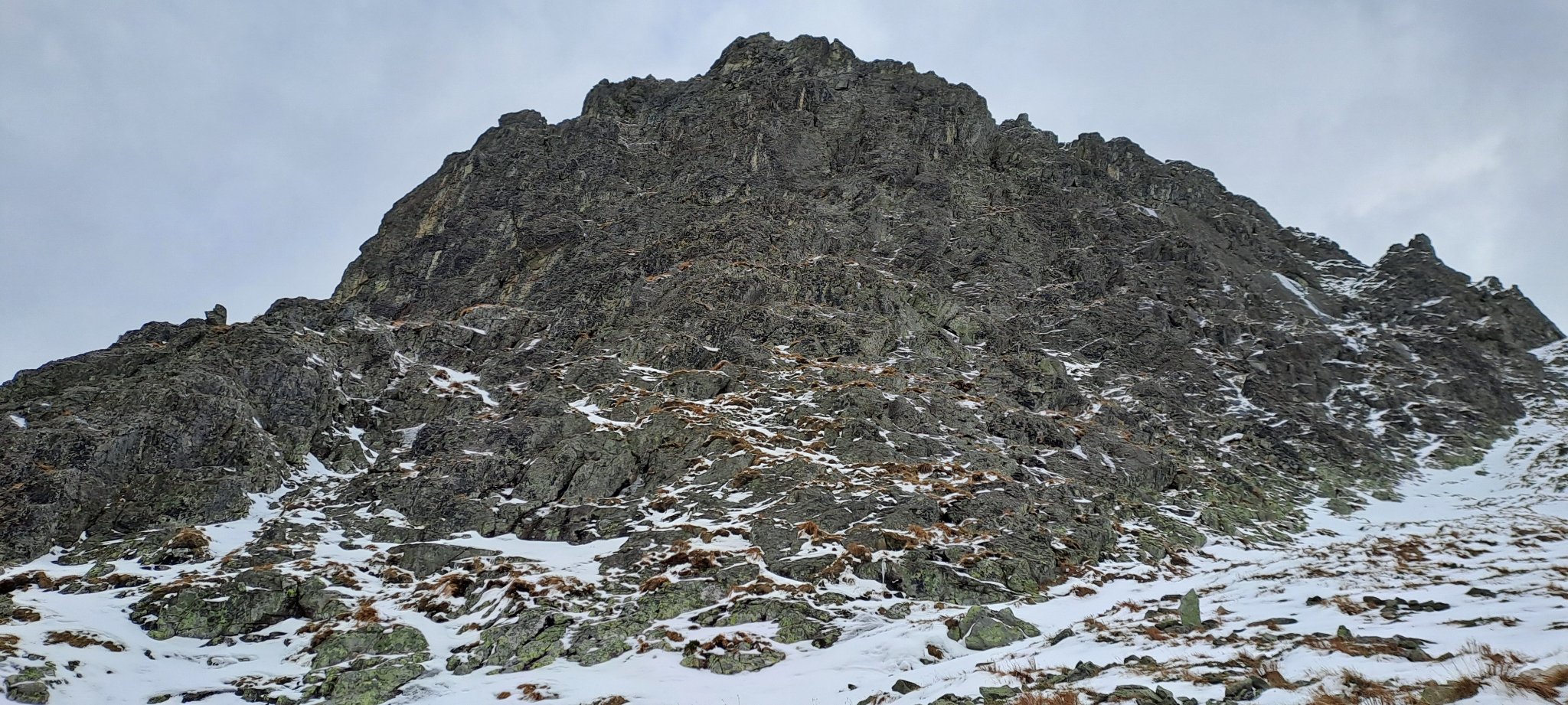
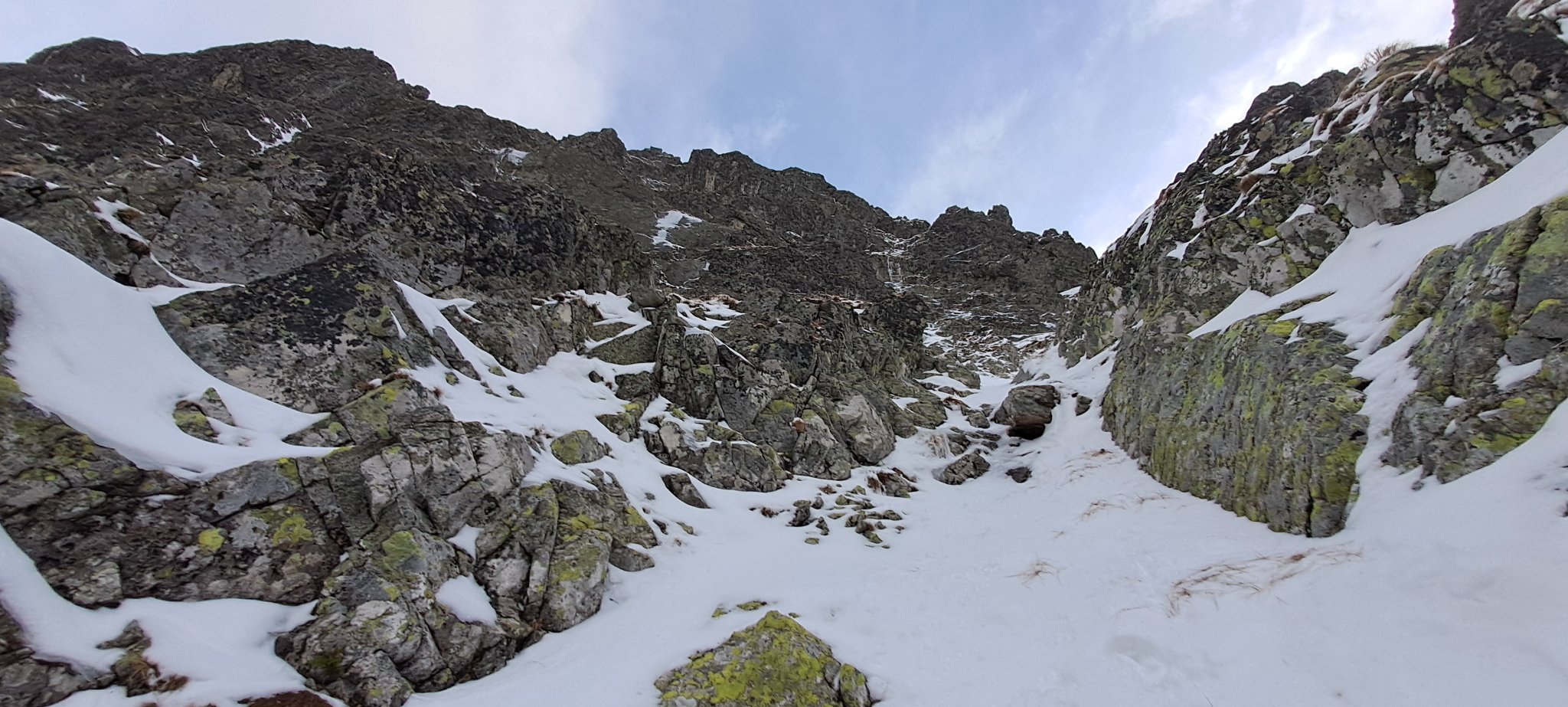
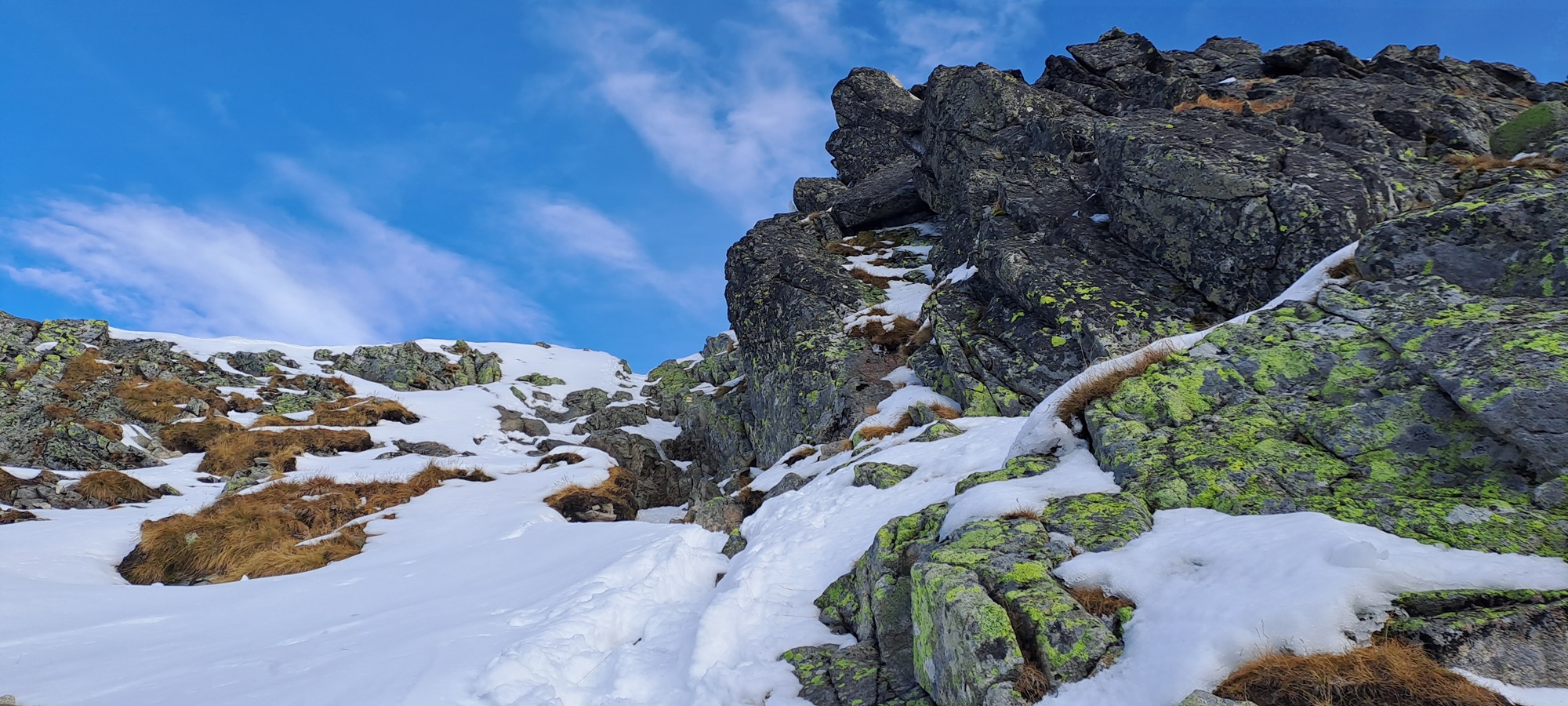
Three weeks had passed and some of the snow had already melted away since, though winter gear (ice axe, crampons, furthermore a helmet) was still necessary for altitudes beyond two-thousand meters.
For Jastrabia veža however, orientation was more tricky than the technical climbing part for the peak is not part of the actual tourist peaks in the High Tatras, and aside from the occasional cairn (which looked like random stone piles anyway) there was not much to help you finding the way.
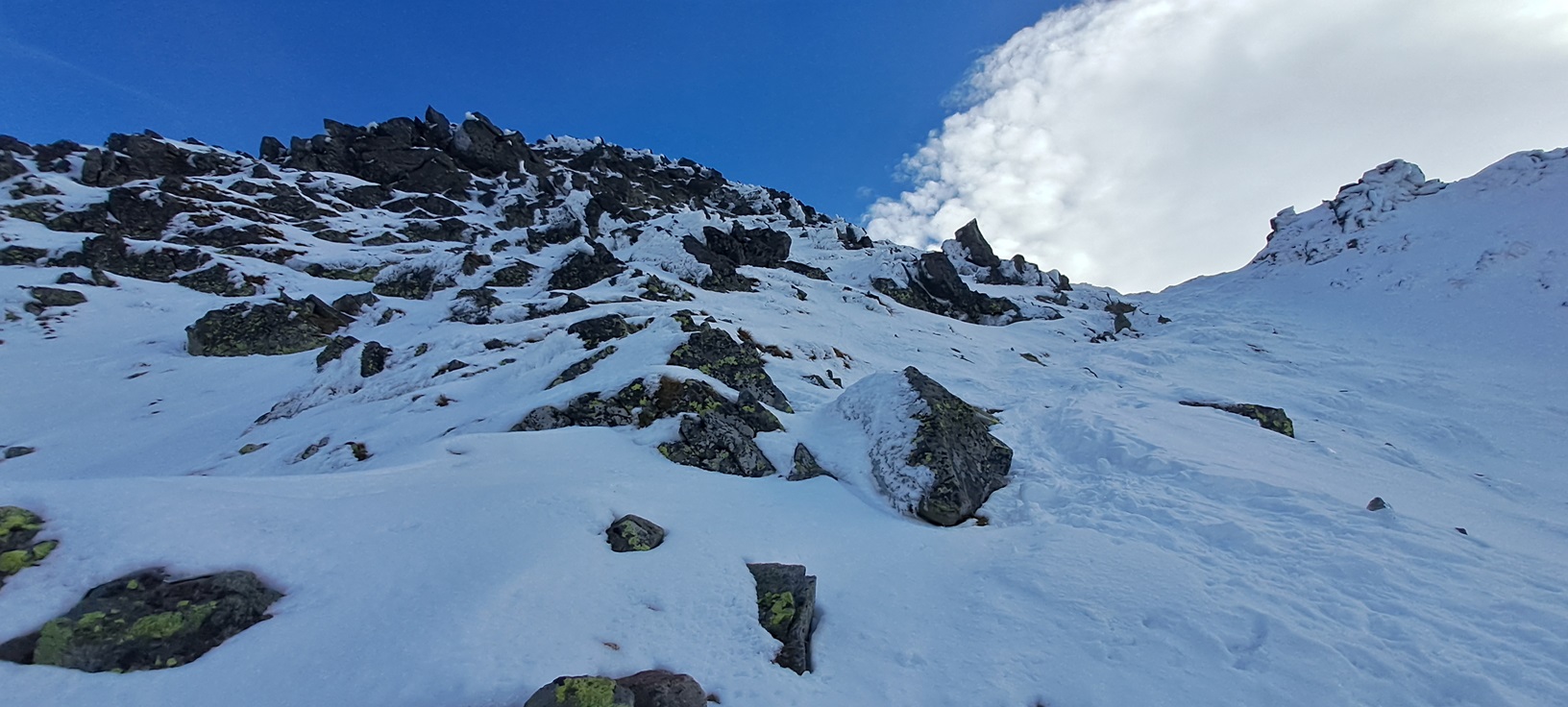
As a matter of fact, orientation was the crucial detail that day, time finally run out as sunset was approaching when I found myself on about 2050 meters, still eighty meters short of the peak.
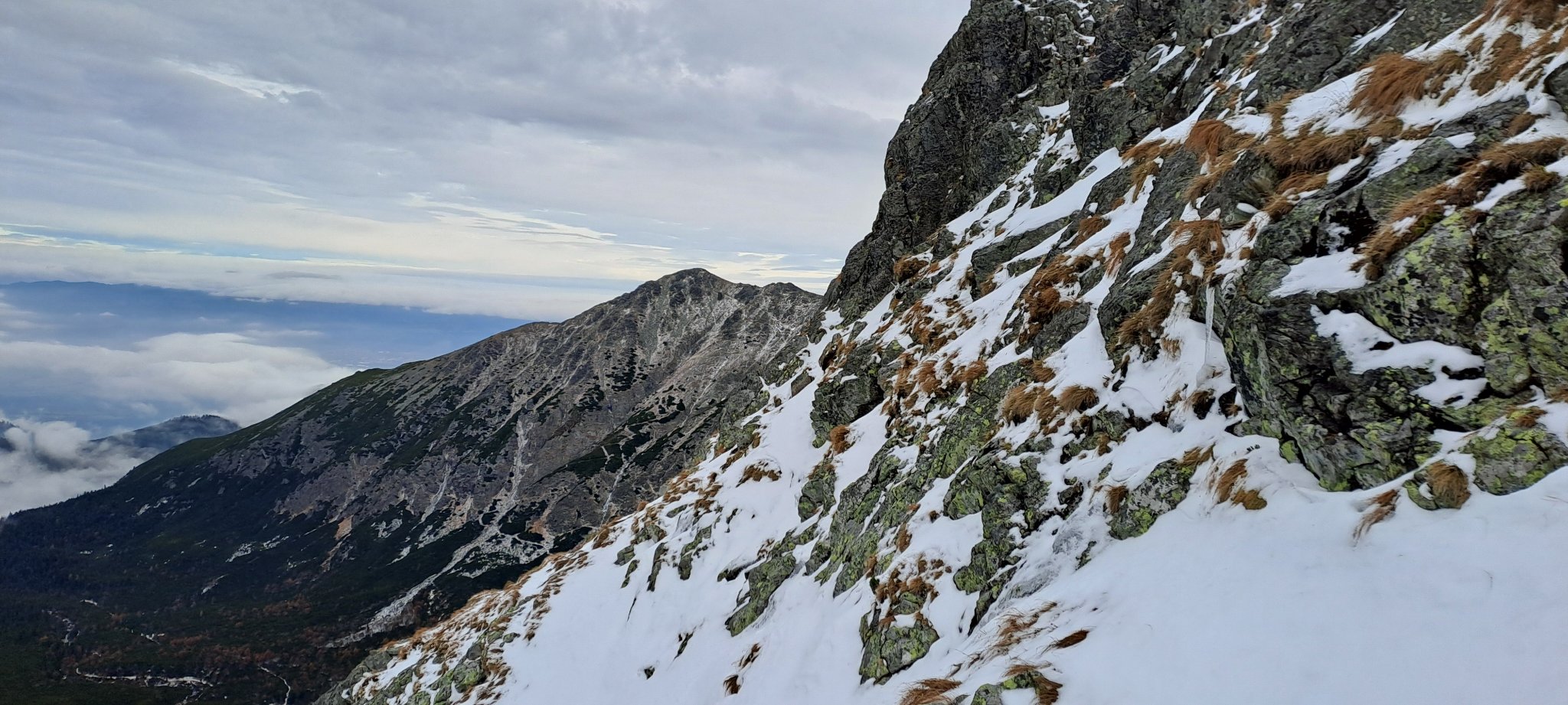
Proceeding was risky and I had the steep, snowy and icy climbing sections now right in front of me (it was a lot steeper as the photos below suggest, and it was also a certainty that ground conditions won’t improve the higher I get), so I was giving in to my gut feeling and turned back, begrudgingly, a concession to my still limited experience with snow and ice.
Yet on a positive note I was able to gain experience for a possible third try, a day in the mountains will never be wasted.
Photo gallery
Jahňací štít, October 22
Červená dolinka is a comparatively small, cold, unwelcoming valley that the sun seldomly reaches.
It takes barely an hour to cross it, and to encounter the first more technical parts at Kolové sedlo and Kolový priechod (2118 meters), which have to be mastered in order to get to Jahňací štít.
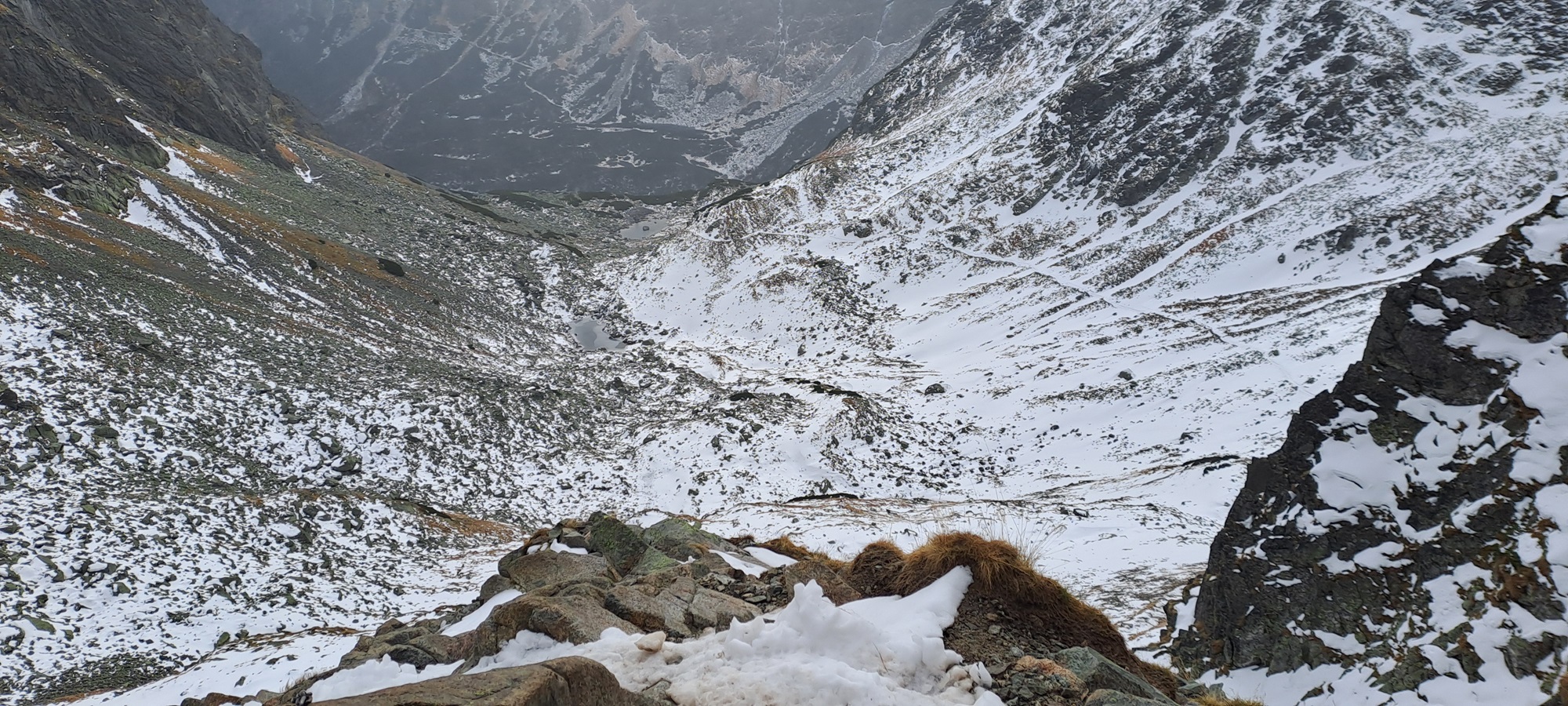
The problems for me on this day and from this point were the transitions between walking on pure rock, icy rock, and snow what made pushing forward a time-consuming endeavour.
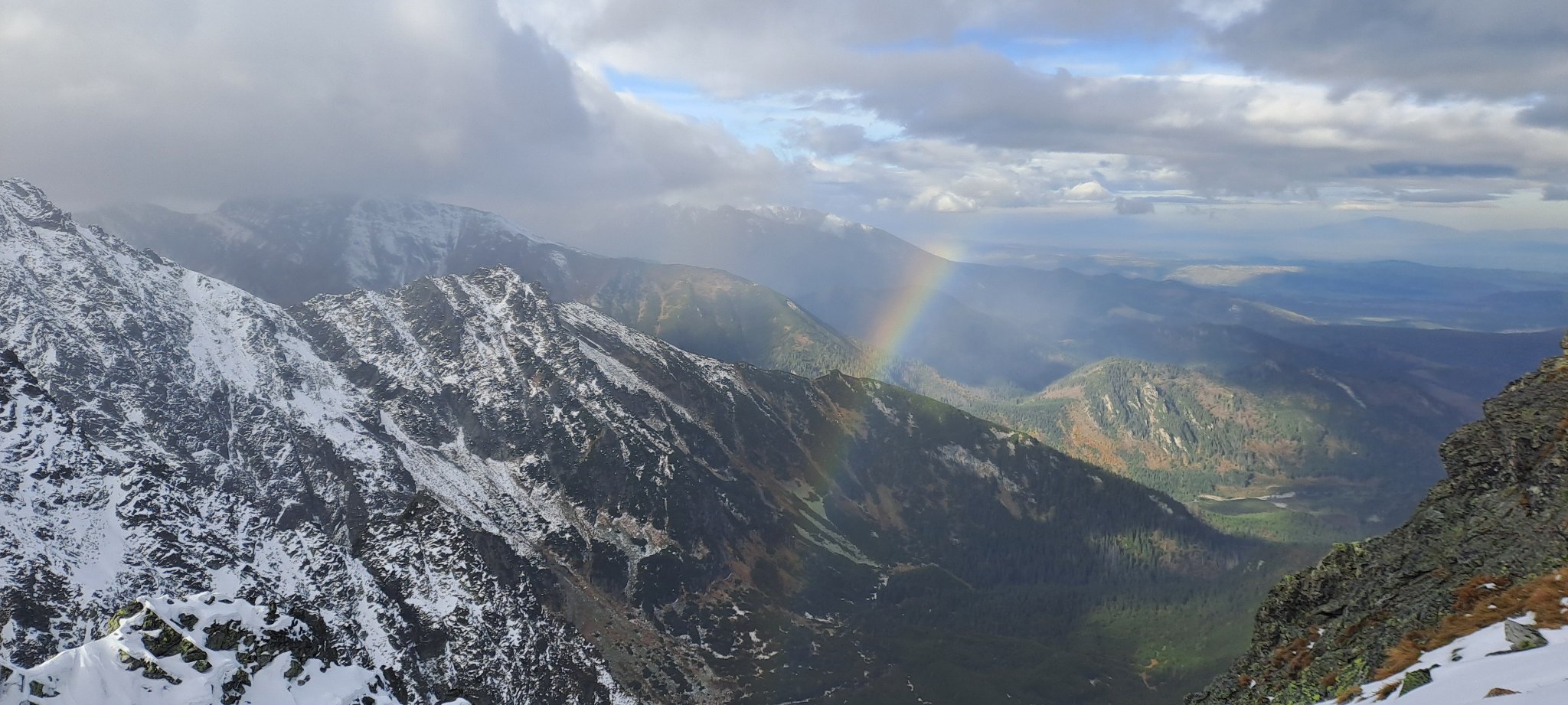
For there weren’t really much footprints guiding you or they were leading to dead ends, especially near the summit when it got steep, and the yellow signs were obscured by the snow, navigation was a problem I had to deal with too, but to a lesser extent and having been on this mountain before certainly helped in this regard.
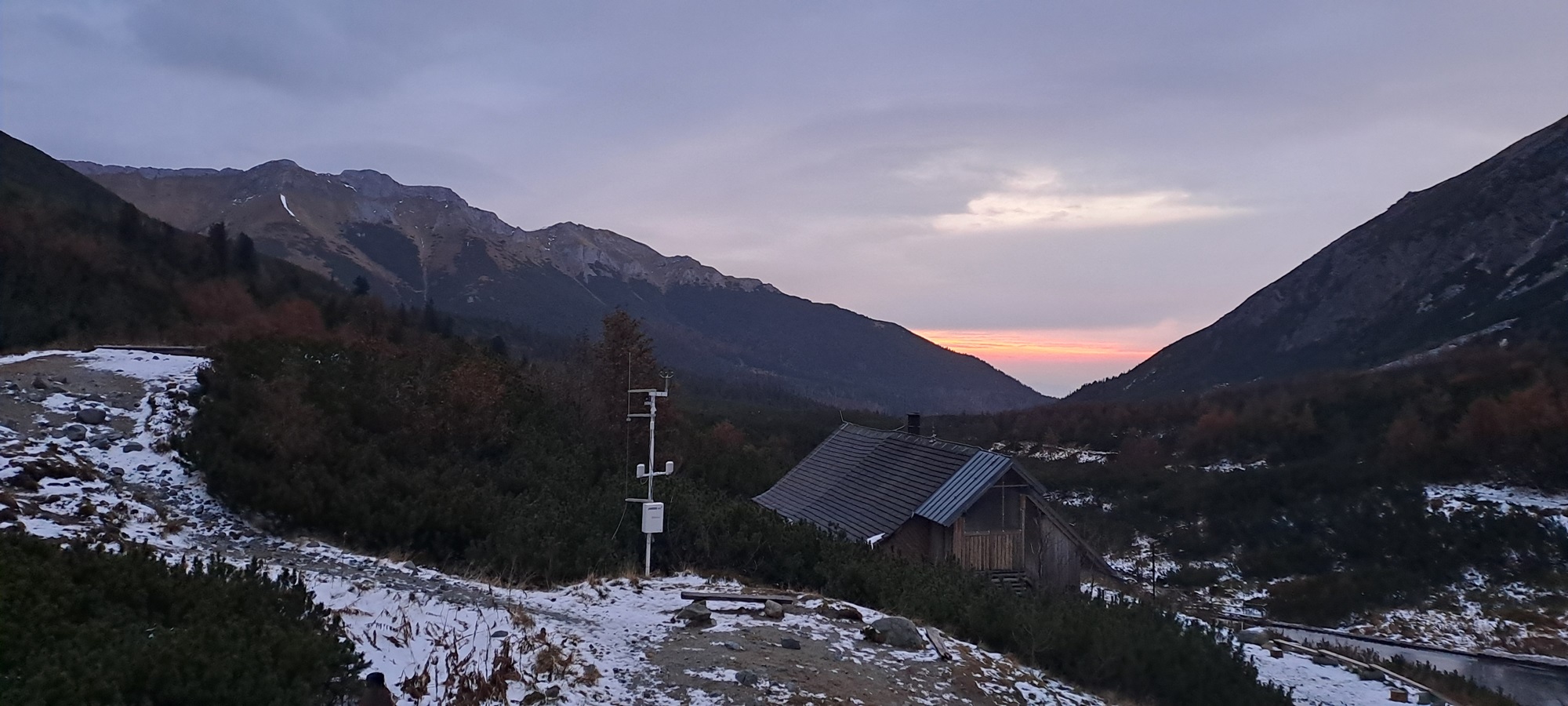
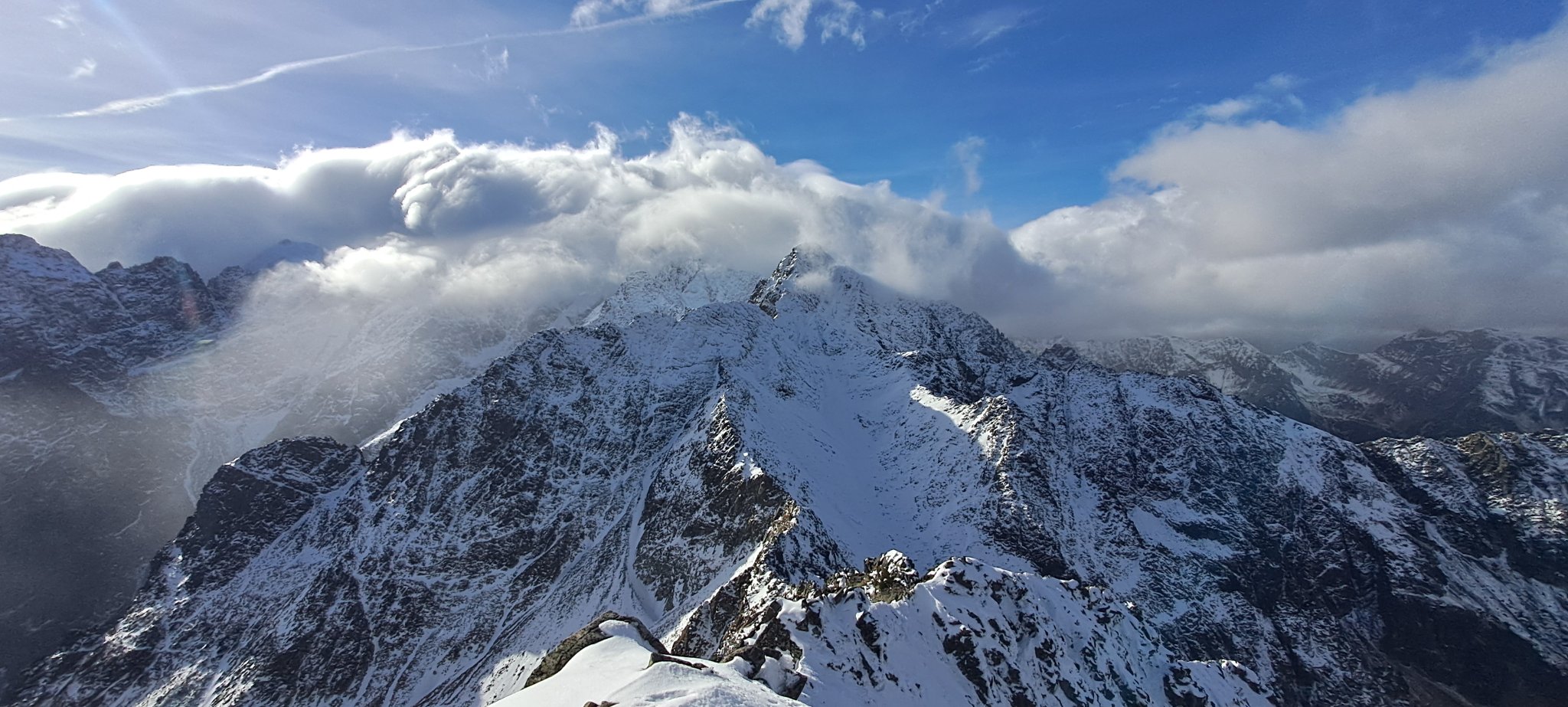
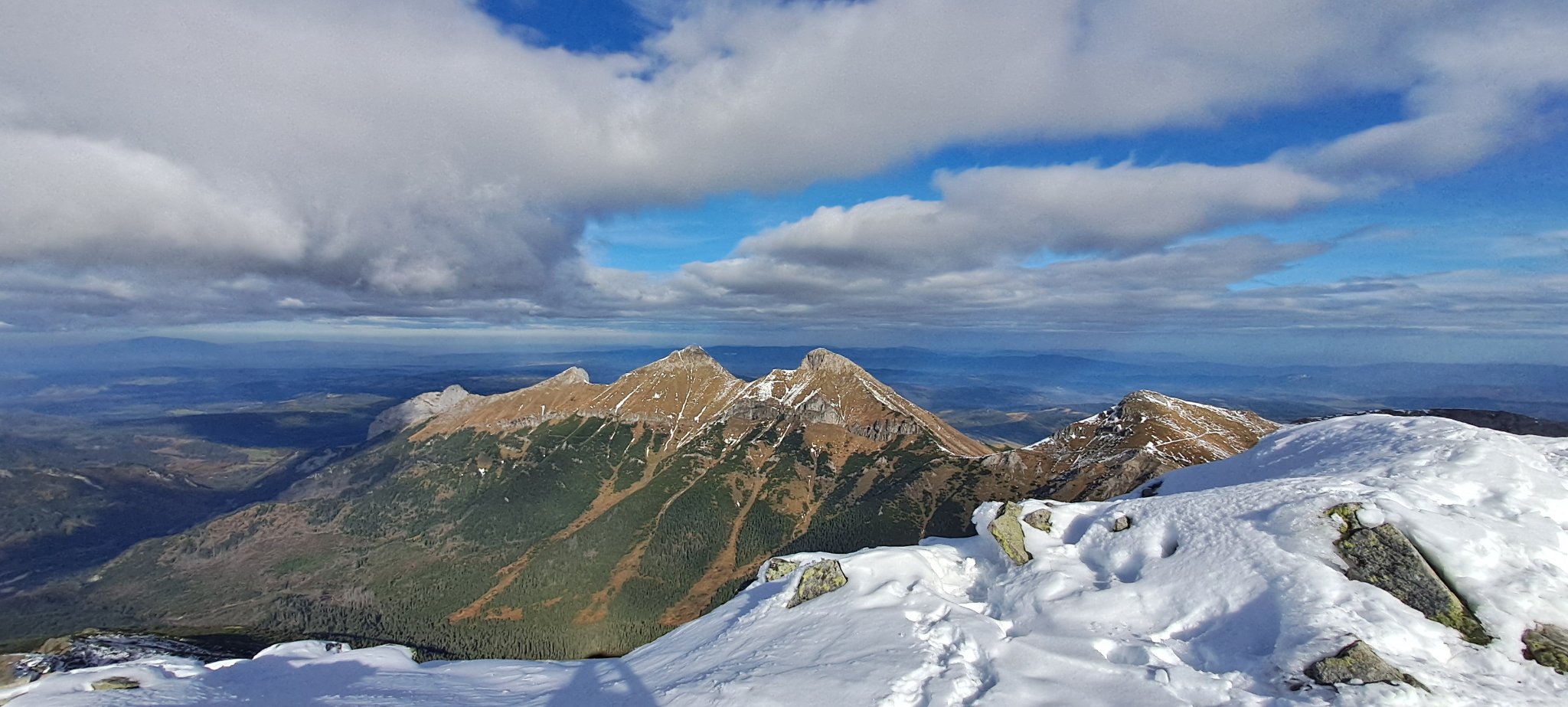
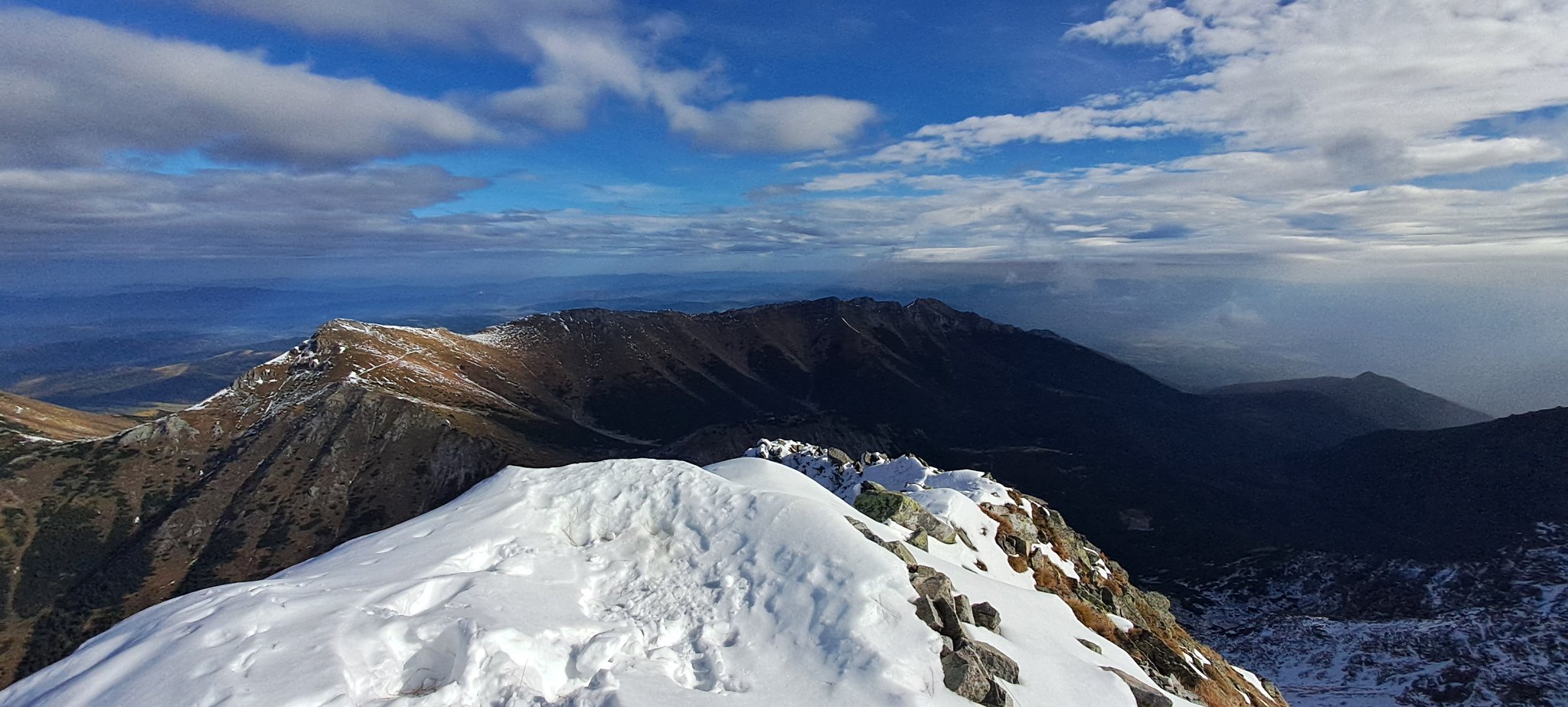
The clouds were clearing as I finally reached the small encircled platform at the top after unwittingly making a detour on a snowy, almost vertical wall (very soft snow so you could not call it difficult), what was a nice reward for three hours of toiling and sweating starting at Chata pri Zelenom plese.
Anyway, it was a decent enough conclusion of a rather short hiking season this year, and I cannot wait to get into the mountains again in spring.
Photo gallery
Footnotes
1 snow and ice on north faces remains the longest however, at least in the Northern Hemisphere
2 winter closure in the Slovak part of the High Tatras mountain range lasts from November to May; the Polish side is accessible all year round, but be warned: it can be very crowded especially during the skiing season that lasts until April
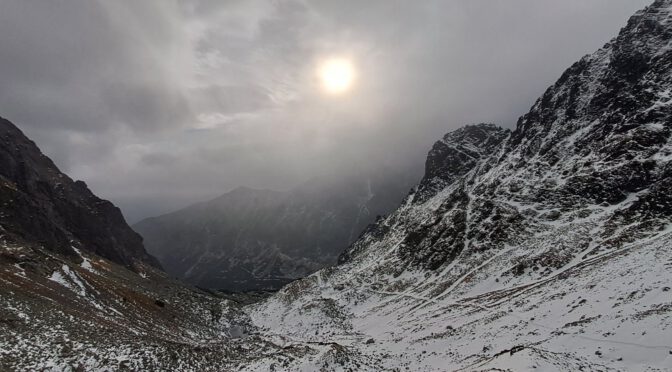
Featured image: Červená dolinka (“Red Valley”)