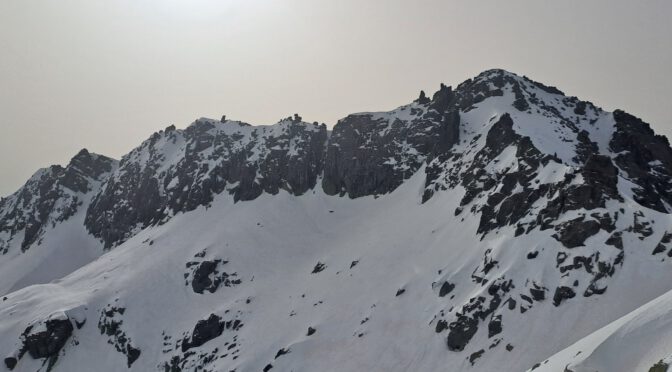
For the more serious mountaineer, a winter tour seems consequential after a summer tour, in case he or she enjoyed the past experience on a particular mountain or in a particular mountain range.
March however, is a curious month in regards to mountaineering.
It’s the month where you encounter the most snow, since the snowfall of the entire winter has accumulated and nothing has yet melted. This is usually true for mountain ranges in Central Europe, but also true for the Sierra de Gredos in Central Spain.
Yet temperatures are slowly starting to rise, and most importantly, days finally get longer (almost twelve hours of daylight at the onset of March), culminating in the clock change on the last Sunday of this very month.
Planning and preparation
As to snow conditions and temperatures, every year is different obviously, but in comparison to past years it had been a rather harsh winter in Europe with incessant avalanche threats even in the lower altitude mountain regions.
Personally I experienced snow since the end of September, as I was hiking in the High Tatras mountain range in Slovakia and had some of my climbing and hiking plans sabotaged.
Still gathering basic experience in winter mountaineering, visiting the Sierra de Gredos at the end of the cold season struck me as reasonable choice. I would hike two or three days through the mountain range and maybe scale the highest peak Pico Almanzor (2591 meters AMSL), best case scenario assumed, while spending the nights in shelters that are available at this time of the year.
Beneficial was, at least I hoped, that I’d been in Spain several times in recent years, in the Pyrenees and the Sierra Nevada that is. So I had a general idea about the conditions of shelters and refugios and what was required of me for ascending peaks described as difficult, though the question mark about snow, ground and weather on any given day evidently remained.
March 3
Setting off from “Plataforma de Gredos”, a spacious parking lot (free of charge during the week) at 1750 meters, my destination on this early March day would be the Refugio Laguna Grande de Gredos (Refugio Elola) at 1945 meters of altitude, where I made sure in advance I could use the winter room for a sleepover.
Even with snow on the trail, this mountain refuge is easily reachable in two and a half hours, though I suppose orientation might be a problem with poor visibility, for signposts are comparatively rare especially after passing Cuento Alto (2271 meters).
This mountain was actually the highest point I reached that day, from there it was a threehundred-odd meters descent to the frozen Laguna Grande lake.
I was lucky with the views, which were indeed stunning and for there was no pressure on me for the sunset was several hours away, I was able to take it easy and enjoy an unspoilt nature experience.
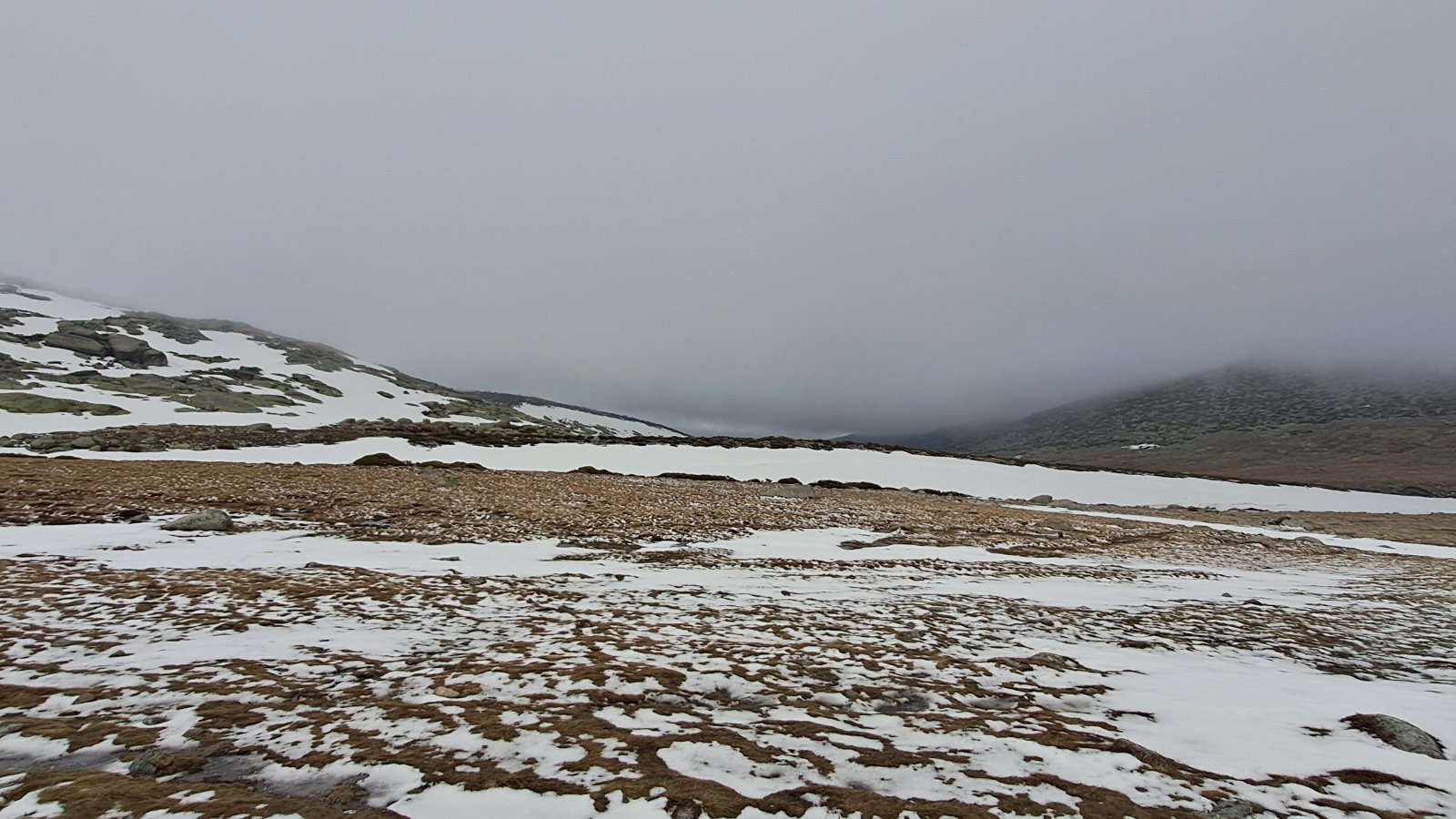
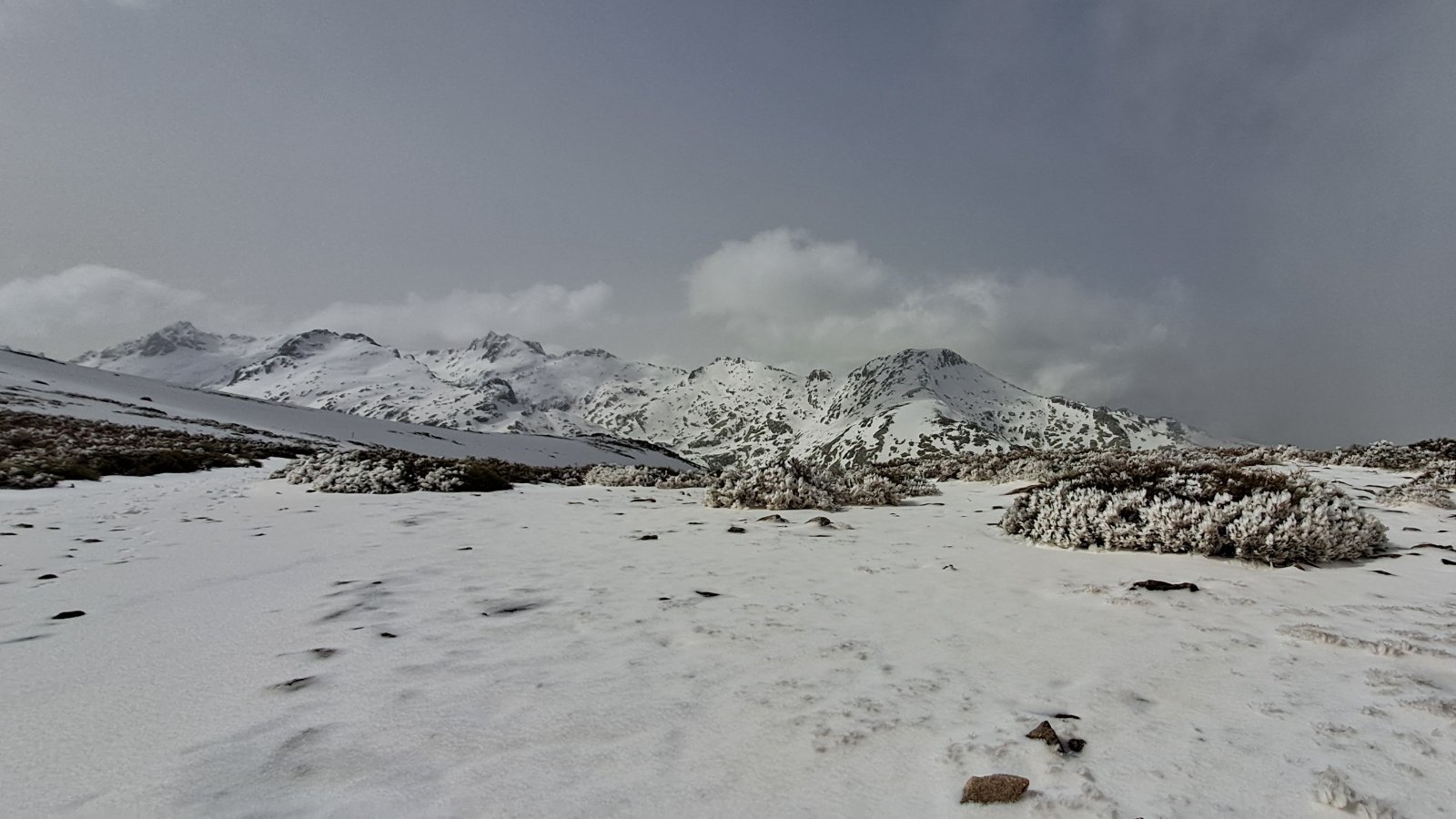
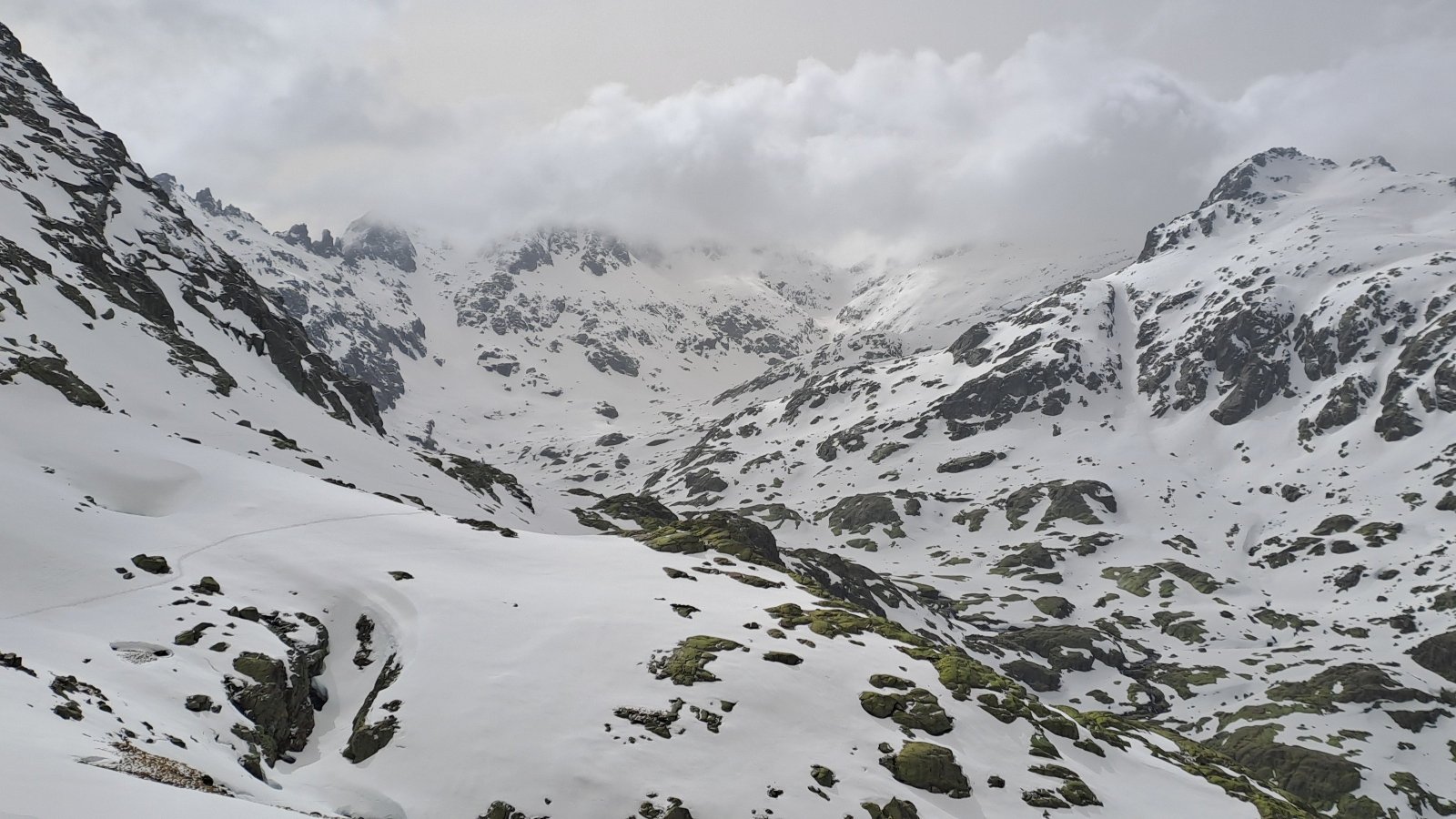
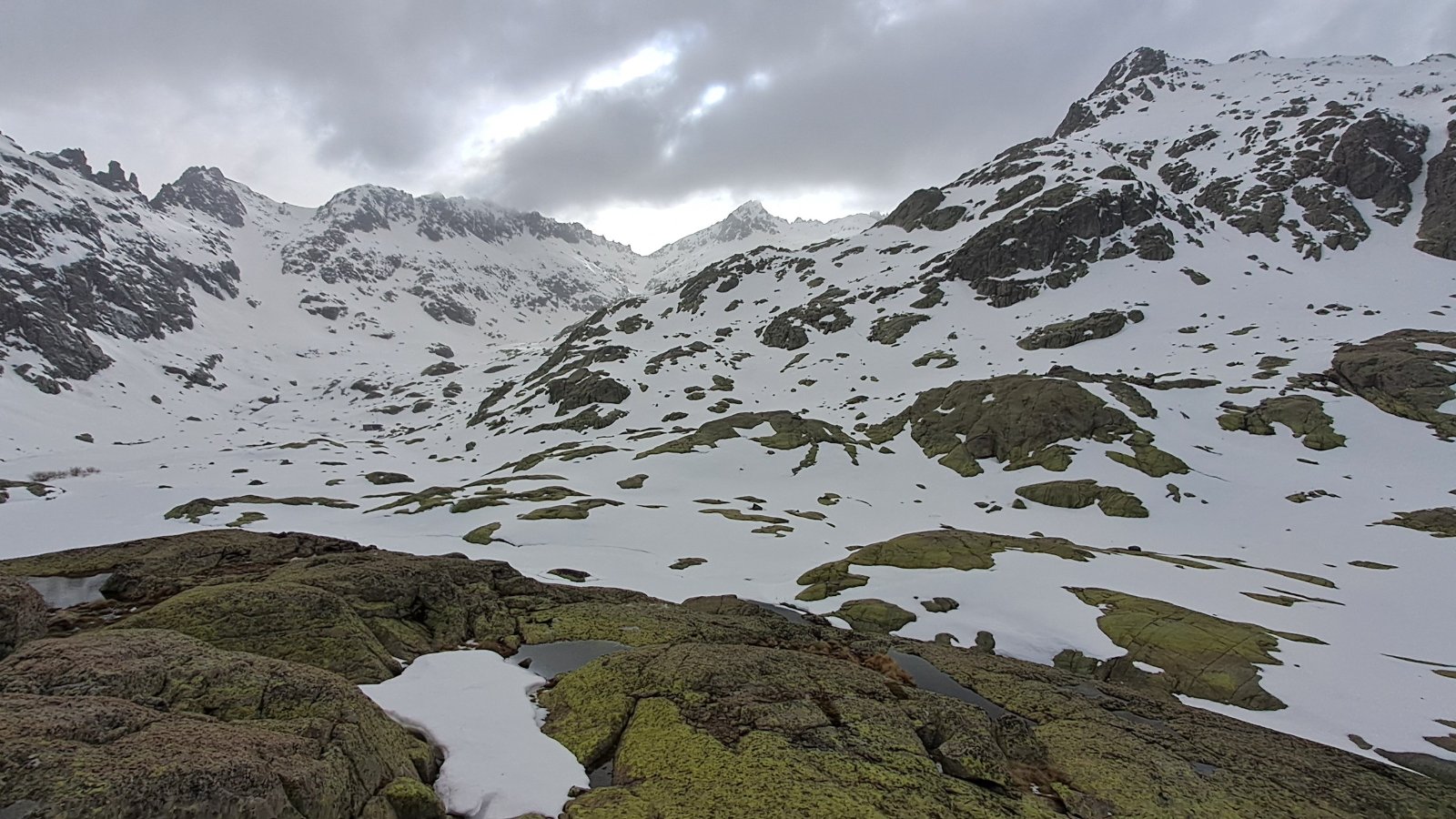
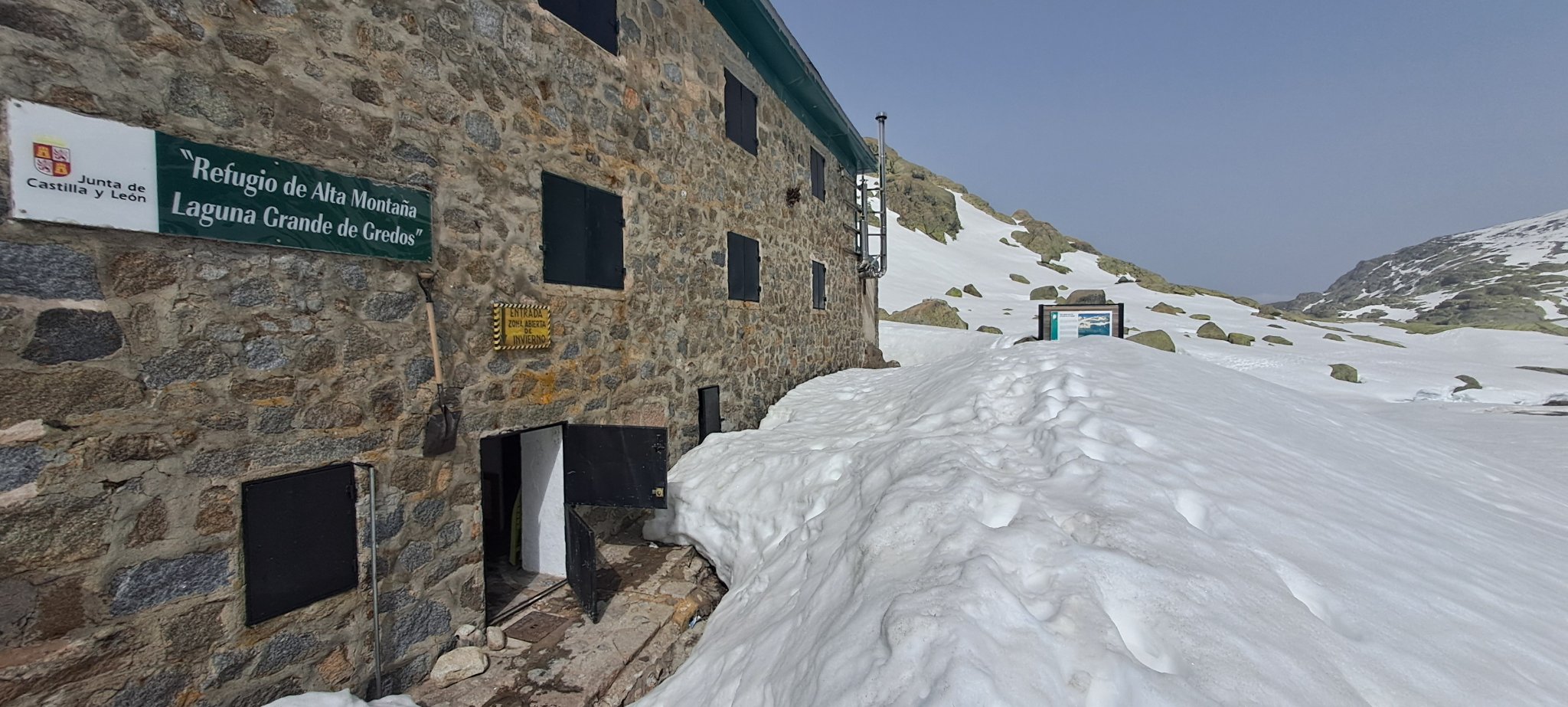
Although I spent almost the entire day in solitude, I happened to run into two climbers during a walk on the lake in late afternoon after I’d made myself comfortable in the murky winter room. They were apparently returning from Pico Almanzor, so I asked them about conditions in the higher altitudes.
Those two guys were obviously locals and also very experienced, so the wise thing was to follow their advise not trying to scale the peak alone and without a rope, for the last section to the peak would be mixed climbing and they “had to do abseiling”.
What I could certainly do was to check out the terrain in the proximity of the peak for future summit attemps, and pick an alternative so far as this was possible and common sensical.
March 4
The night was cold as expected, but with the provided blankets, my sleeping bag and warm tea (I had my camping stove with me) more or less endurable.
I got no cell service, so I could not retrieve any up to date weather forecast but the sky looked promising. At any rate, I could do a quick retreat to the refugio if that was necessary. I had also brought enough food in case I had to sit out bad weather.
So here it goes. One advantage of winter is you can follow the footsteps in the snow. The ones leading away from the refugio up to the mountains I could be reasonably sure they aren’t leading to dead ends for they must be from the two climbers I had just met the day before.
Marveling at the mountain scenery unfolding in front of me after I had an easy hike of about one hour ploughing through the soft white mass, I decided on the spot to ascend to Portilla Bermeja, a mountain saddle exceeding the 2400 meters mark.
Right before that, I scaled about half-way to Pico Almanzor where I inspected ridges and access points to the actual peak, and here I finally got cell service.
So I could check the latest weather forecast and tell my people that I am alright, what was not unimportant because no other mountaineers were around and an accident would go unnoticed.
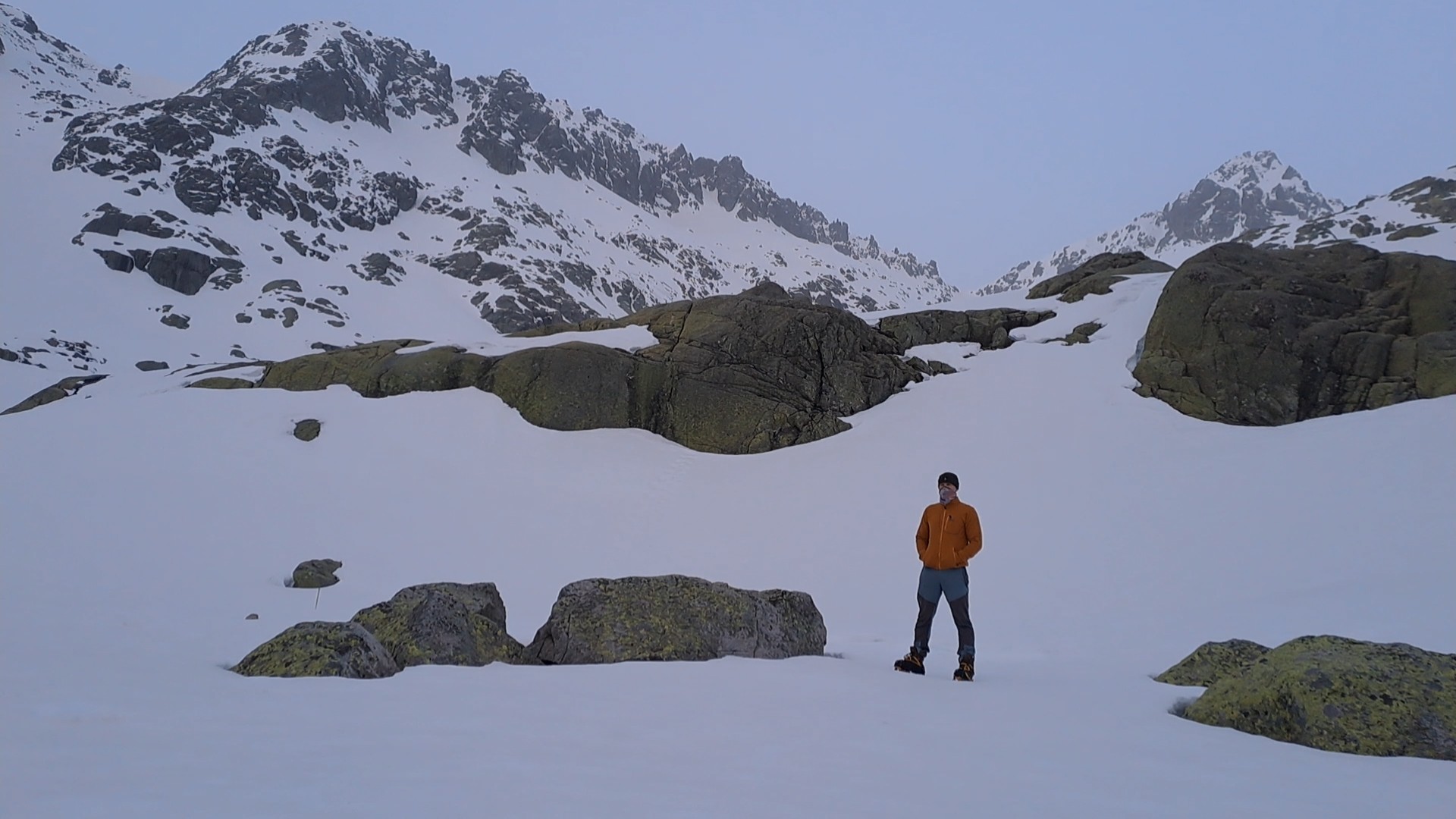
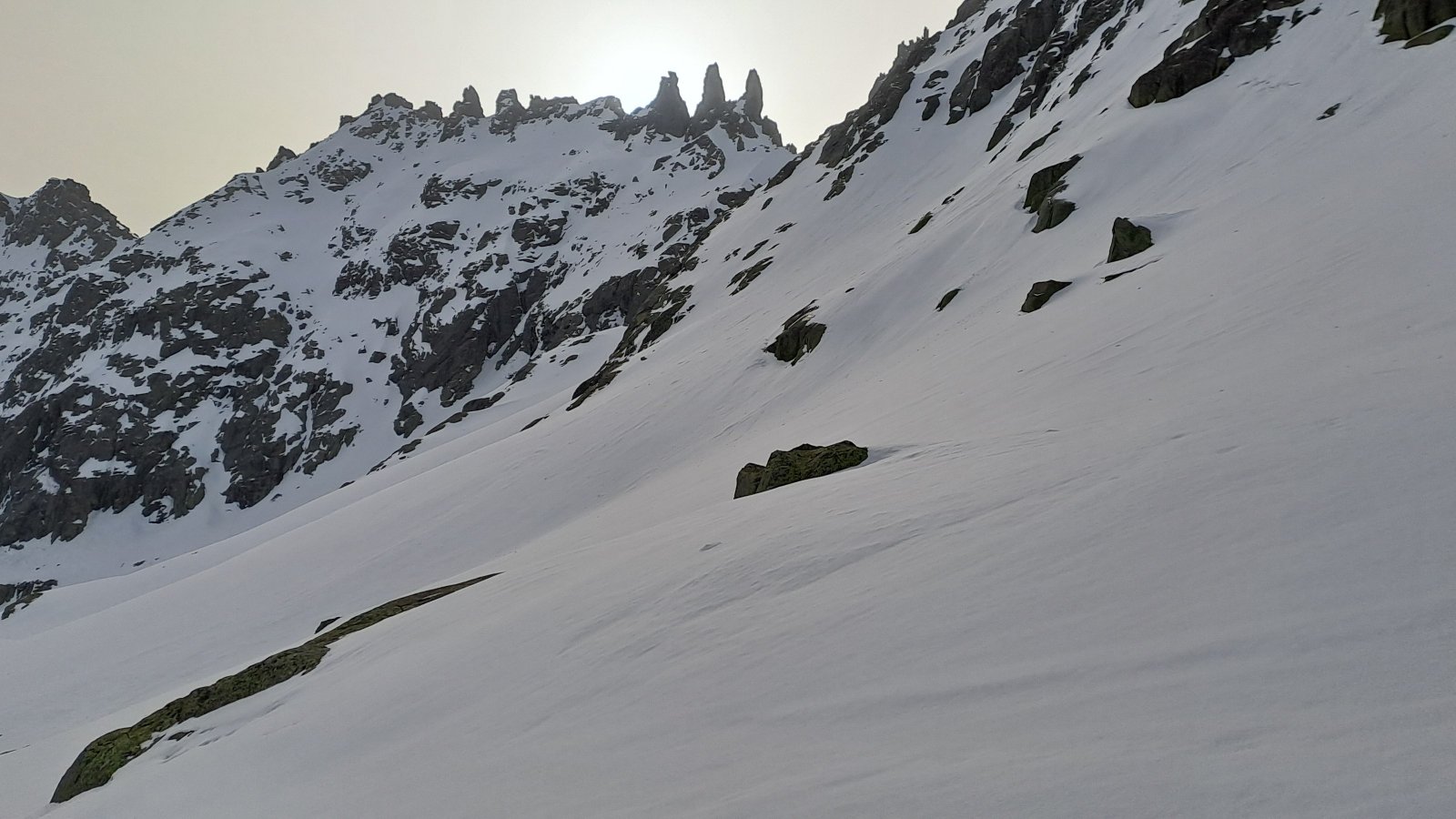
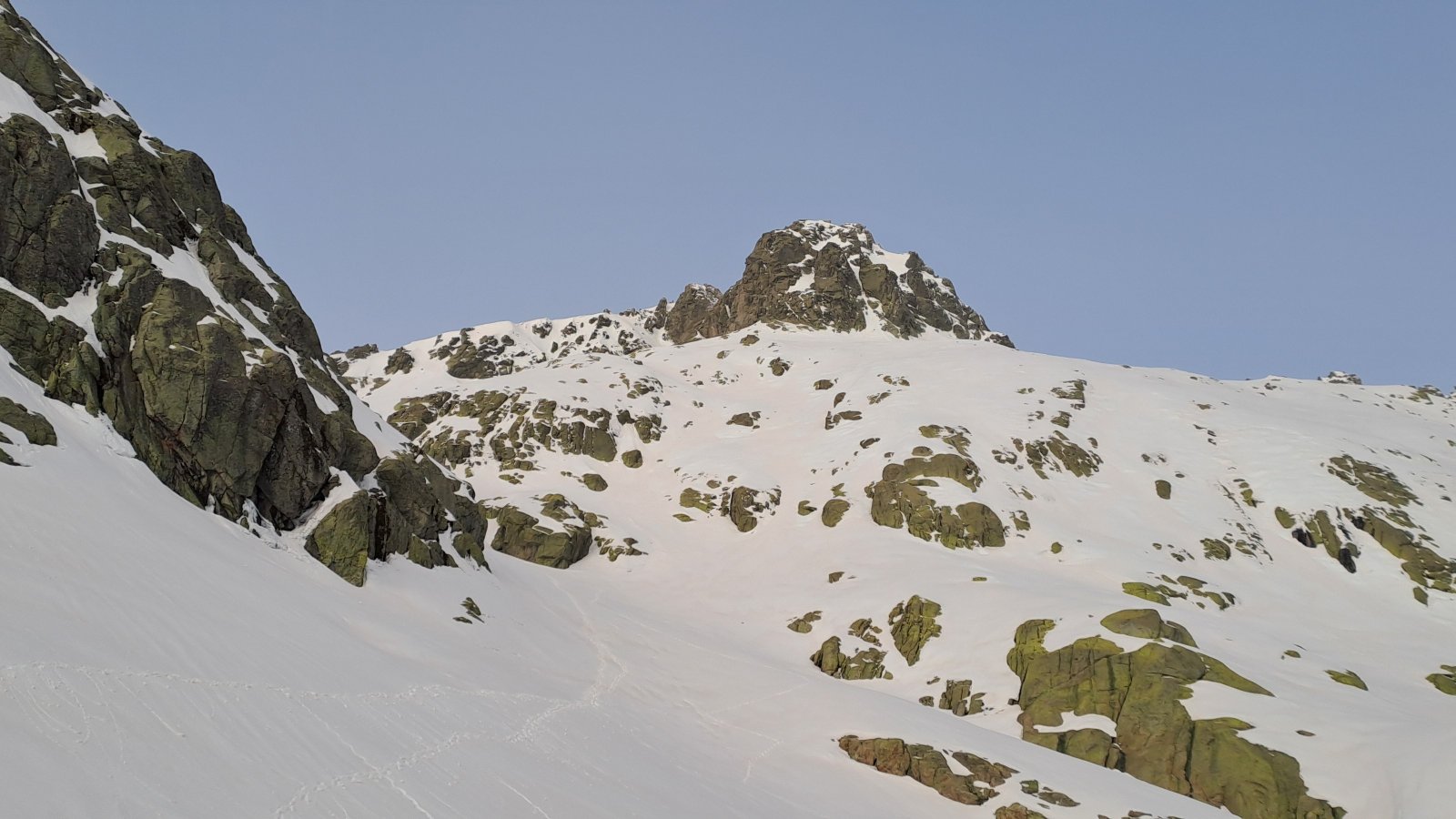
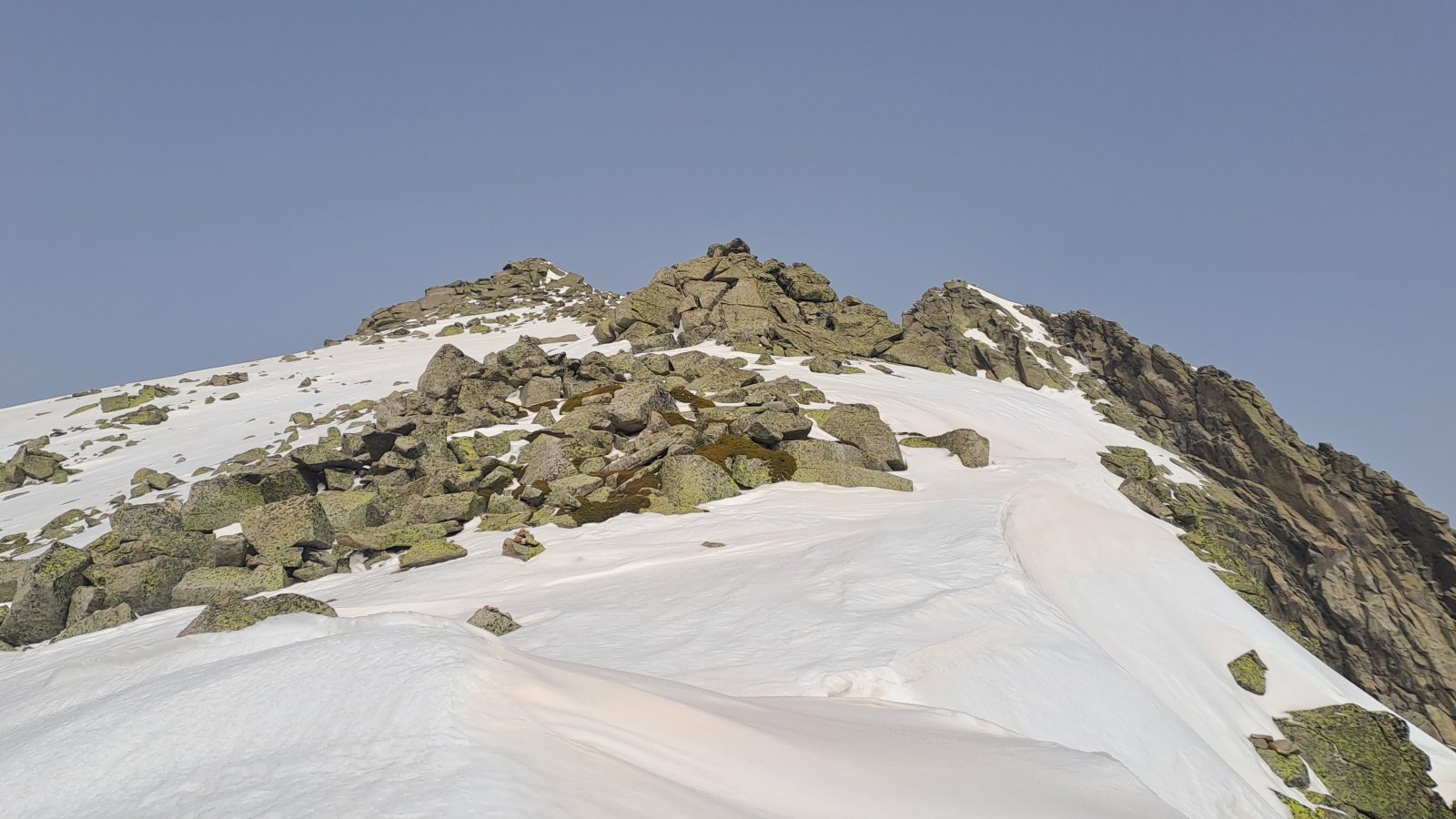
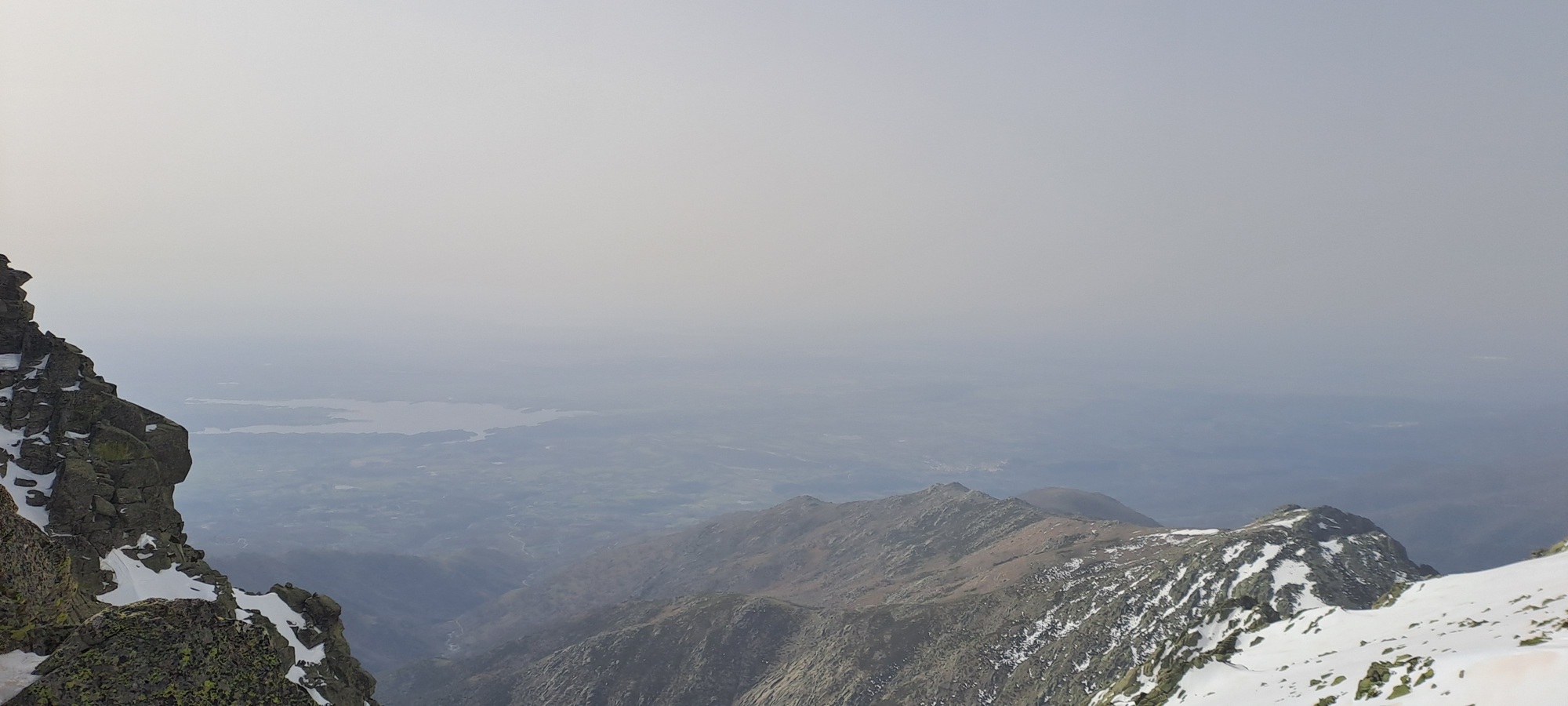
The reason I wanted to go to the saddle was simple: have a view across the Southern stretches of the mountain range.
I did not find footsteps anywhere, so it was on me putting them into the snow as the first one this year.
The rewards were delightful. Words and photos can hardly describe the impression you get in this complete silence of the mountains, only occasionally interrupted by the birds’ chirpings and the ominous clatter of ice crystals.
Summary
The margin for error is zero in winter time in the mountains, so the prudent thing to do is take it slowly and build the necessary experience gradually.
For the Sierra de Gredos was one of the few mountain ranges in Europe without an avalanche threat in February or March and boasting reasonable temperatures, this was the right place to gain more of such experience.
But it was also possible getting an almost unfiltered nature experience, as I’ve described in detail above.